Buying Property in Slovakia: A Step-by-Step Guide for Foreigners


Slovaks are fundamentally a nation of homeowners. While long-term renting is the norm in many Western countries, here, owning your own four walls is practically a cultural rite of passage. If you've been living in this beautiful country for a while, there eventually comes a moment when paying rent starts to feel like throwing euros into a black hole, and you decide it’s time to put down permanent roots. 🏢💡
But let’s be honest: taking the leap from tenant to homeowner in a foreign country is intimidating. You suddenly find yourself staring at online property listings, calculating mortgage rates, and trying to understand what on earth a "Kataster" is—all while navigating legal jargon in a language that loves its consonants.
If you've decided to stop paying your landlord's mortgage, you're making a smart long-term investment. Whether you're eyeing a modern apartment overlooking the Danube or a quiet family house near the High Tatras, here is the unfiltered, step-by-step guide to buying property in Slovakia for foreigners. 🗺️🔑
1. The Big Question: Can Foreigners Buy Property Here? 🌍
Let’s get the legalities out of the way first. The short answer is: Yes! Slovakia has a very open real estate market.
- EU Citizens: You have the exact same property rights as a Slovak citizen. There are zero restrictions.
- Non-EU Citizens: You can also buy property freely, with one tiny exception: you cannot buy agricultural or forest land. But if you’re looking for a residential apartment or a house with a standard yard, you are completely clear to purchase.
You don't even technically need permanent residency to buy a house in Slovakia, though having a residence permit (Prechodný pobyt or Trvalý pobyt) makes getting a local mortgage infinitely easier. 📑
2. The Hunt: Where to Find Real Estate 🕵️♂️💻
Forget walking into a brick-and-mortar agency to look at photos in a window. The Slovak real estate market lives almost entirely online.
Here are the heavy hitters you need to bookmark:
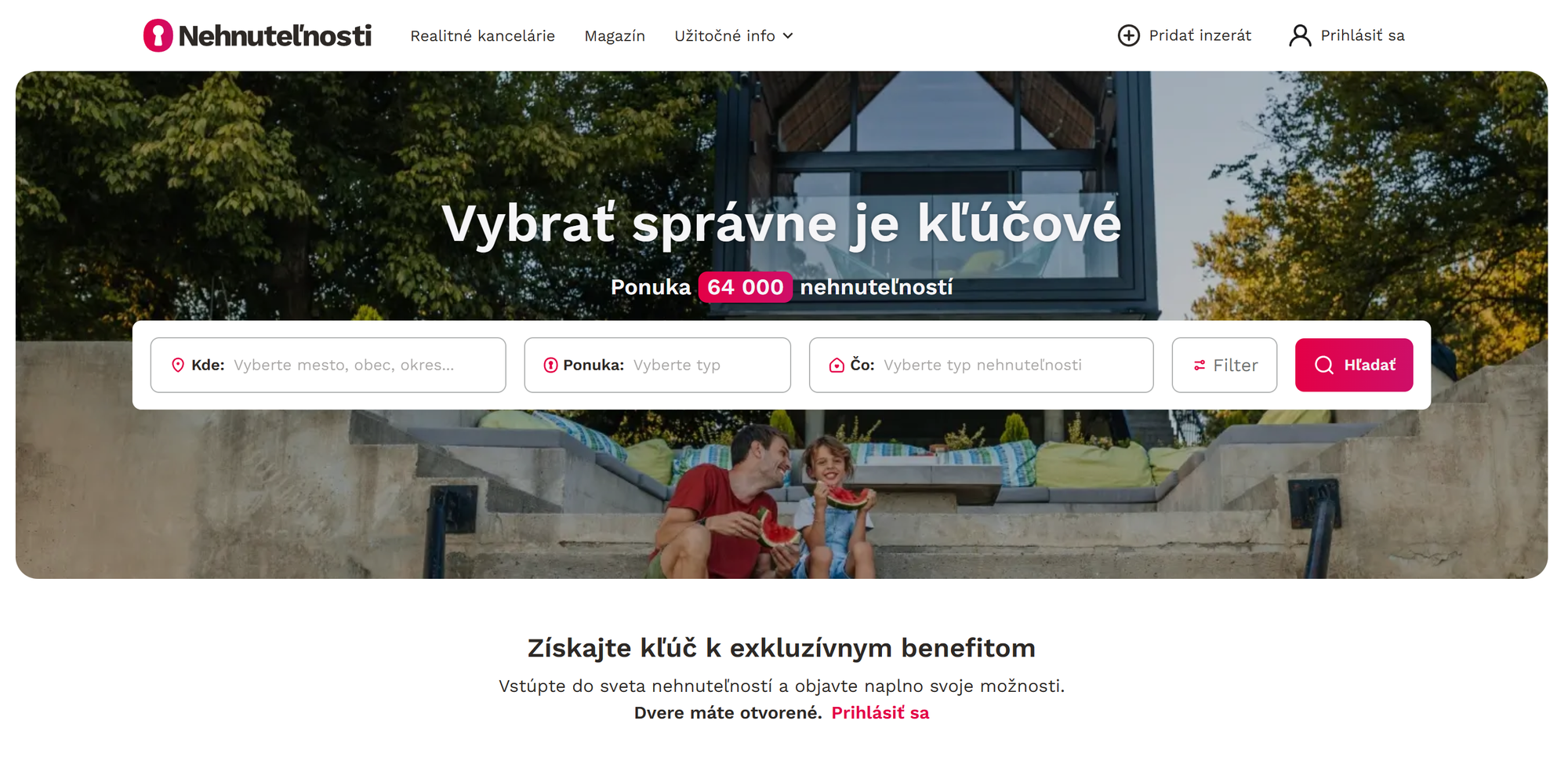
- Nehnutelnosti.sk: The undisputed king of Slovak real estate portals. If a property is for sale, it’s here.
- Reality.sk: Another massive database, great for comparing prices.
- Facebook Groups: Groups like Bývanie v Bratislave (Living in Bratislava) are excellent for finding properties sold directly by owners, which helps you cut out the agency fee.
The Role of the "Realitka" (Real Estate Agency) 🤝
Most properties are sold through a Realitná kancelária (Real Estate Agency). In Slovakia, the seller typically pays the agency commission (usually around 2% to 5% of the property price). However, always double-check the listing! Make sure it says “Cena vrátane provízie RK” (Price includes agency commission) so you don't get hit with a surprise bill later.
3. Show Me the Money: Getting a Slovak Mortgage 🏦💸
Unless you are buying in cash, you’ll need a Hypotéka (Mortgage). Getting a mortgage as a foreigner is entirely possible, but local banks (like Tatra Banka, VÚB, or Slovenská Sporiteľňa) are notoriously conservative.
What the bank wants to see:
- A permanent work contract (Trvalý pracovný pomer - TPP) past the probation period, or at least 1-2 years of solid tax returns if you are a freelancer/business owner in Slovakia.
- A clear credit history.
- A registered address in Slovakia.
The Golden Rule of Slovak Mortgages: Banks here rarely give 100% mortgages anymore. The standard limit is 80% LTV (Loan-to-Value). This means you need to have at least 20% of the property's value in cash, or you need to co-finance with a consumer loan (which comes with a much higher interest rate). 📊
Expat Tip: Don't go to the banks yourself. Hire a Finančný poradca (Financial Advisor/Mortgage Broker). Their services are completely free for you (they get a commission from the bank), and they know exactly which banks are currently offering the best rates for foreigners.
4. The Purchasing Process: Step-by-Step 📝🏛️
This is where the magic (and the paperwork) happens. The process of buying property in Slovakia follows a very strict, highly secure legal sequence.
Step 1: The Reservation Agreement (Rezervačná zmluva) 🛑
Once you find the perfect place, you’ll sign a reservation agreement to take the property off the market. At this point, you pay a deposit—usually between €2,000 and €5,000.
- Warning: If you back out because you simply changed your mind, you lose this deposit. Ensure your mortgage is pre-approved before signing!
Step 2: The Expert Valuation (Znalecký posudok) 📏
The bank won't just take the seller's word for the price. They will send an independent appraiser (Znalec) to evaluate the property. The bank will base your 80% mortgage on this expert's valuation, not the listing price.
Step 3: The Purchase Contract (Kúpna zmluva) ✒️
This is the big one. It outlines exactly how and when the property transfers to you. Always have an independent, English-speaking lawyer review this document. Do not rely solely on the real estate agency’s lawyer.
Step 4: The Safe Money Transfer (Vinkulácia or Notárska úschova) 🔒
You never send the purchase money directly to the seller's bank account. Instead, the money goes into a secure holding account.
- Vinkulácia: A blocked account at the bank.
- Notárska úschova: An escrow account held by a State Notary. The money is only released to the seller after the government officially registers you as the new owner. It’s a brilliant system that protects both parties.
Step 5: The Kataster (Cadastral Registry) 🏢
The signed contracts are submitted to the Kataster nehnuteľností (Cadastral Registry). This is the government body that records land ownership. By law, they have 30 days to process standard applications. During this month, you just wait. Once they stamp the paperwork, the property is officially yours, and the escrow money is released to the seller! 🎉
5. The Handover (Odovzdanie) 🗝️📋
You own it! But you’re not done yet.
You and the seller will meet at the property to sign a Preberací protokol (Handover Protocol). You will write down the exact numbers on the electricity, gas, and water meters.
With this protocol, you can now transfer the utilities into your name. Providers like ZSE (electricity) or SPP (gas) require this document to ensure you aren't paying for the previous owner's energy usage. Lastly, don't forget to report your new ownership to the local city hall for your annual property tax (Daň z nehnuteľnosti), which is incredibly cheap in Slovakia compared to Western Europe. 💡💧
Summary and Takeaways 🌟
Buying a house in a foreign country is a massive milestone. While the bureaucracy might seem heavy at first glance, the Slovak system is remarkably transparent and designed to protect the buyer.
Here is your quick checklist:
- Browse smart: Use Nehnutelnosti.sk to understand the market.
- Get a broker: Use a free financial advisor to secure your mortgage.
- Cash is king: Have at least 20% of the purchase price saved up.
- Trust the escrow: Always use a bank Vinkulácia or Notary to hold the funds.
- Get a lawyer: Have an independent pro review the Kúpna zmluva.
Navigating Slovakia real estate takes a bit of patience, but the moment you turn the key in your very own apartment, all that paperwork instantly becomes worth it. Welcome home! 🥂


